

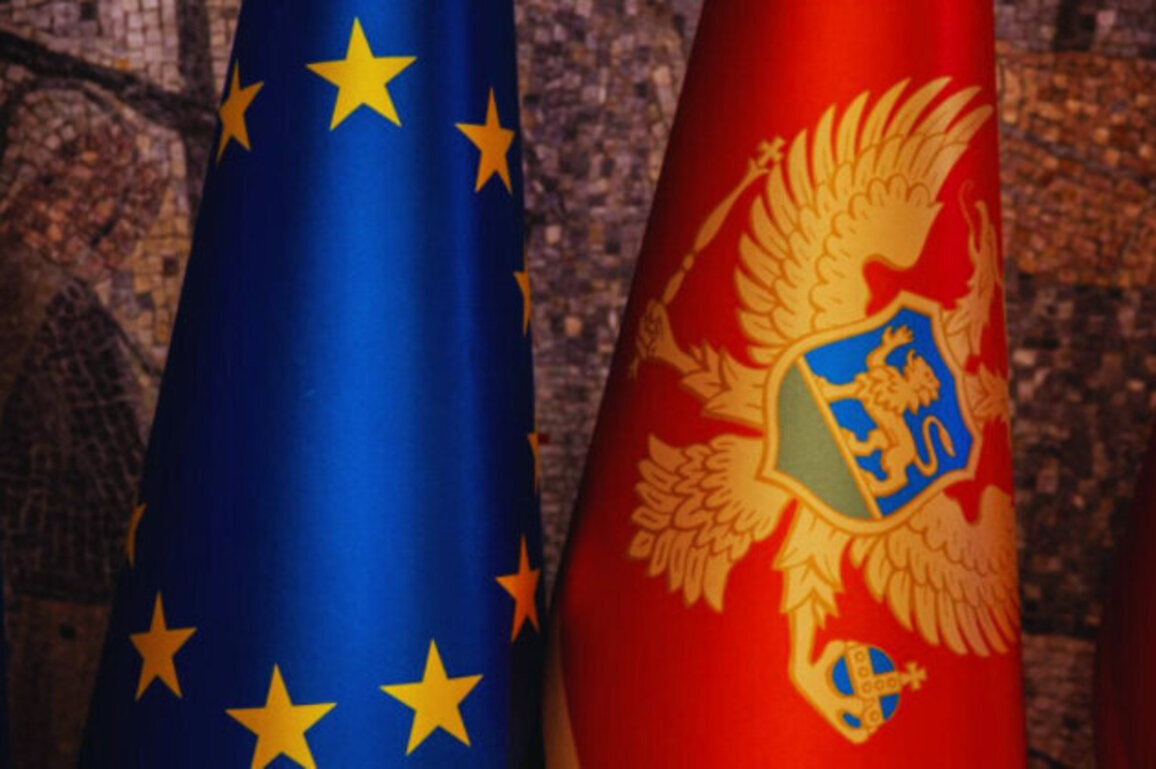
Last week the ambassadors of the 27 EU member states, acting through the Committee of Permanent Representatives (COREPER), approved the establishment of an ad?hoc working group to start drafting Montenegro's Accession Treaty, marking the first such step since Croatia's treaty was prepared more than a decade ago. The decision was immediately hailed as a ?historic moment? by Montenegrin Minister of European Affairs Maida Gor?evi?, who called it ?the final step on the path to full membership of Montenegro in the EU.? European Council President Antnio Costa described the move as ?a key milestone? and noted pointedly that it was ?the first time since 2013? that the EU had 'started the clock for the next enlargement.? So, is a small Balkan nation of barely 620,000 people really about to become the 28th member state?
Since Croatia joined in July 2013, the EU has not admitted a single new country and indeed shrank when the United Kingdom left in 2020. The launch of a treaty?drafting working party is therefore far more than a bureaucratic gesture, because it signals that the Union is ready to take enlargement off the pause button. Commissioner for Enlargement Marta Kos put it clearly: ?Montenegro's place inside the EU is now taking shape.?
Montenegro's path to this point has been slow, but steady. It applied for membership in December 2008, obtained candidate status in December 2010, and opened formal accession talks in June 2012. All 33 negotiating chapters have been opened and by April 2026 Podgorica had provisionally closed 14 of them. Five of those, including covering right of establishment, free movement of capital, company law, agriculture and rural development, and fisheries, were closed in a single intergovernmental conference last December. Prime Minister Milojko Spaji? has publicly set 2028 as the target for full membership and the European Commission's 2025 Enlargement Package identified Montenegro, Albania, Ukraine, and Moldova as the front?runners on reforms.
Still, the treaty?drafting process is not a done deal. The working group will coordinate the final legal and technical preparation of the treaty, define transitional periods, and design safeguard mechanisms that are new to the enlargement toolkit. Kos stressed that ?it also offers a chance to draw lessons from past enlargements and include new and stronger safeguards in future accession treaties to prevent backsliding on the rule of law and fundamental values.? In other words, the Union wants to ensure that the experience of earlier enlargements, where some countries slipped backwards on judicial independence and anti?corruption standards after joining, is not repeated.
For Montenegro, the hardest work lies in the chapters that have not yet been closed. Chapter 27 (environment and climate change) requires massive investment in wastewater treatment and solid?waste management; the controversial Botun wastewater plant near Podgorica has become a litmus test of whether the country can deliver unpopular, but necessary infrastructure projects. Chapters 23 and 24, dealing with judiciary, fundamental rights, and justice and home affairs, demand reforms that cut across successive governments and remain vulnerable to political turbulence. Montenegro's public support for EU membership is consistently among the highest in the region, with 64% of citizens saying they would vote in favor in a referendum, and that popular pressure gives political elites a strong incentive to maintain reform momentum.
On the EU side, there is a growing desire to show that enlargement is still a credible policy. The war in Ukraine, uncertainty over the Western Balkans? geopolitical orientation, and a crowded field of candidates featuring Albania, Serbia, North Macedonia, Bosnia and Herzegovina, and, more recently, Ukraine and Moldova - have put the bureaucrats in Brussels in a complicated situation. Admitting a small, NATO?member state like Montenegro would be a symbolic yet manageable way to demonstrate that the door is genuinely open.
Yet the timeline remains fragile. The treaty will only be finalized once all chapters are closed, which means Podgorica must demonstrate full alignment with EU legislation, build the administrative capacity to implement it, and present a clear financing plan. Pessimists point out that the EU's own absorption capacity, that is the ability to integrate a new member without diluting its own cohesion, is an open question, especially as the bloc debates internal reforms to its budget and decision?making procedures. Optimists counter that Montenegro's small size makes it a relatively easy case.
So, will Montenegro be the next EU member state? The machinery is now in motion as never before in 13 years. The political signals from Brussels are more positive than they have been for any candidate since Croatia. But the final stretch is technically demanding and the EU's own internal readiness will be tested along the way. If Podgorica stays on track, the answer could well be ?yes? and sooner than many would have predicted even a year ago.